MSKE
Green Technologies LLP
Comprehensive operating processes, advanced filtration technologies, and treatment stages for sustainable industrial emissions control.
Advanced treatment units designed to capture particulate matter, harmful gases, VOCs, and odors from exhaust streams.

Removes coarse particles from the exhaust gas using centrifugal force, reducing particulate load for downstream equipment.

Captures fine particulate matter down to sub-micron levels using high-efficiency fabric filter bags.
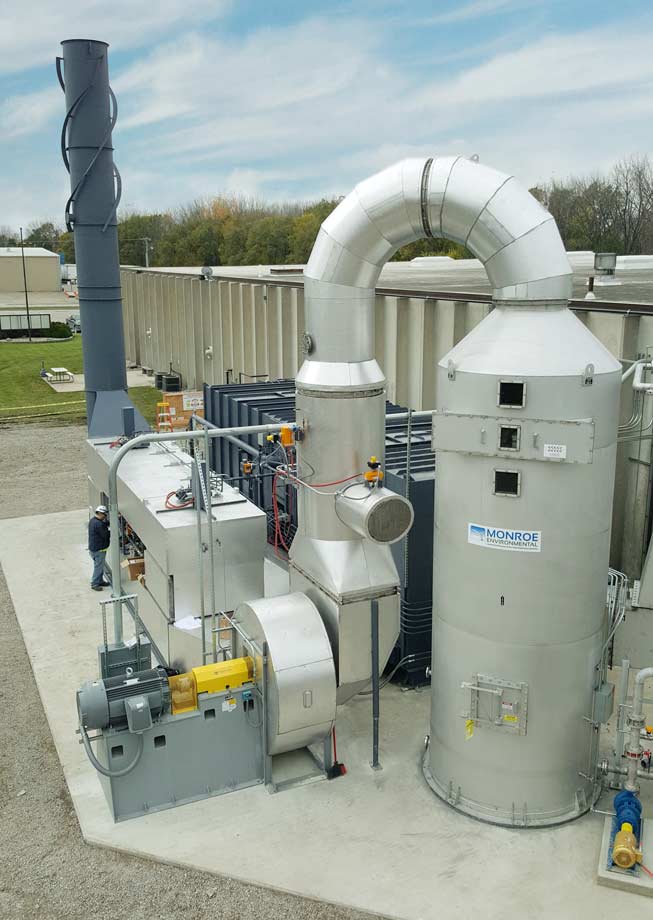
Removes gaseous pollutants, acid fumes, and soluble compounds by scrubbing exhaust gas with a liquid solution.

Uses high-voltage electrical charges to ionize and remove fine particles from high-volume flue gas streams.

Oxidizes and destroys harmful volatile organic compounds (VOCs) and hazardous pollutants at high temperatures.

Adsorbs gaseous pollutants, chemical vapors, and industrial odors using porous activated carbon media beds.
Detailed sequence of operations from initial pollutant capture to continuous environmental monitoring.
Air containing dust, smoke, fumes, gases, and other contaminants is captured from industrial processes through specialized hoods, ducts, and exhaust extraction systems.
The contaminated air stream is conveyed safely through a network of robust ductwork using heavy-duty blowers or industrial fans towards the pollution control equipment.
In the primary treatment stage, mechanical devices such as cyclone separators utilize centrifugal force to drop out larger dust particles, significantly reducing the burden on fine filtration units.
The air stream passes through high-efficiency equipment like fabric bag filters or Electrostatic Precipitators (ESP), where fine airborne particulates are electrostatically or mechanically separated.
If acid gases or toxic chemical vapors are present, the air flows into wet scrubbers or gas absorption units where hazardous compounds are scrubbed, neutralized, or absorbed.
Activated carbon adsorbers or high-temperature thermal oxidizers are employed to break down volatile organic compounds (VOCs) and eliminate objectionable industrial odors.
Following multi-stage treatment, the purified clean air is safely discharged into the atmosphere through an exhaust stack or chimney, adhering strictly to environmental emission limits.
Extracted dry dust, liquid sludge, or chemical by-products separated during treatment are directed into sealed hoppers and containers for recycling or approved environmental disposal.
Advanced sensor arrays continuously check differential pressure, volumetric airflow, temperature, particulate concentration, and emission levels to guarantee peak efficiency and regulatory compliance.
Tailored pollution control architectures designed for key industrial sectors.